Mechanical extract, poor fan choice or poor installation?.....................
23rd May 2018
Mechanical extract, poor fan choice or poor installation?.....................
I’ve been a fan (no pun intended) of Envriovents mechanical extract fan the “Cyclone” for a number of years now. The fan incorporates a constant volume feature and intelligent humidity sensor allowing it to correlate the fans speed in accordance with the ambient humidity levels which makes it very energy efficient in comparison to other models and manufacturers. Its ugly, I can’t deny that but it’s long been one of our top through the wall fan recommendations.
Over recent years however I’ve started to see these fans converted into inline units with a face plate conversion kit allowing a duct to be mounted to the front leading to a ceiling mounted grill. This Envirovent says, allows the fan to be utilised as an inline unit as appose to just a through the wall fan.
My problem is it wasn’t designed as an inline fan, that is clear when you look at it. As such the humidity sensors are located within the unit not within the bathroom below. In this circumstance humid air needs to migrate through the grill along the length of the duct before it reaches the control sensor to adjust the fans speed and performance proportionately. In practice this rarely works well. I’ve lost count now of the number of these conversions I’ve seen which fail to work efficiently. We’ve found that even after turning on the shower facilities and increasing the humidity within the room to in excess of 80% RH the fans still operating in trickle mode.
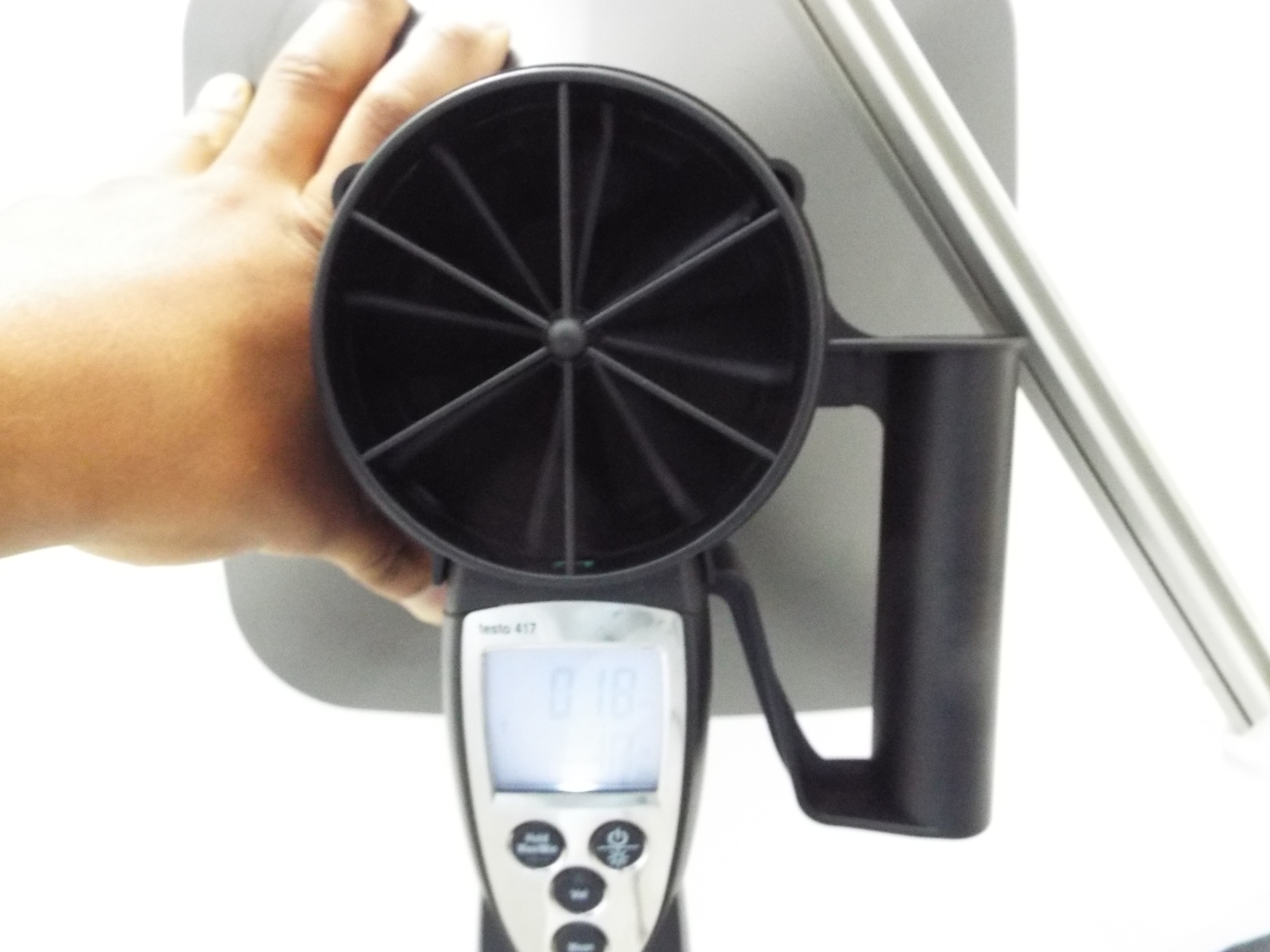
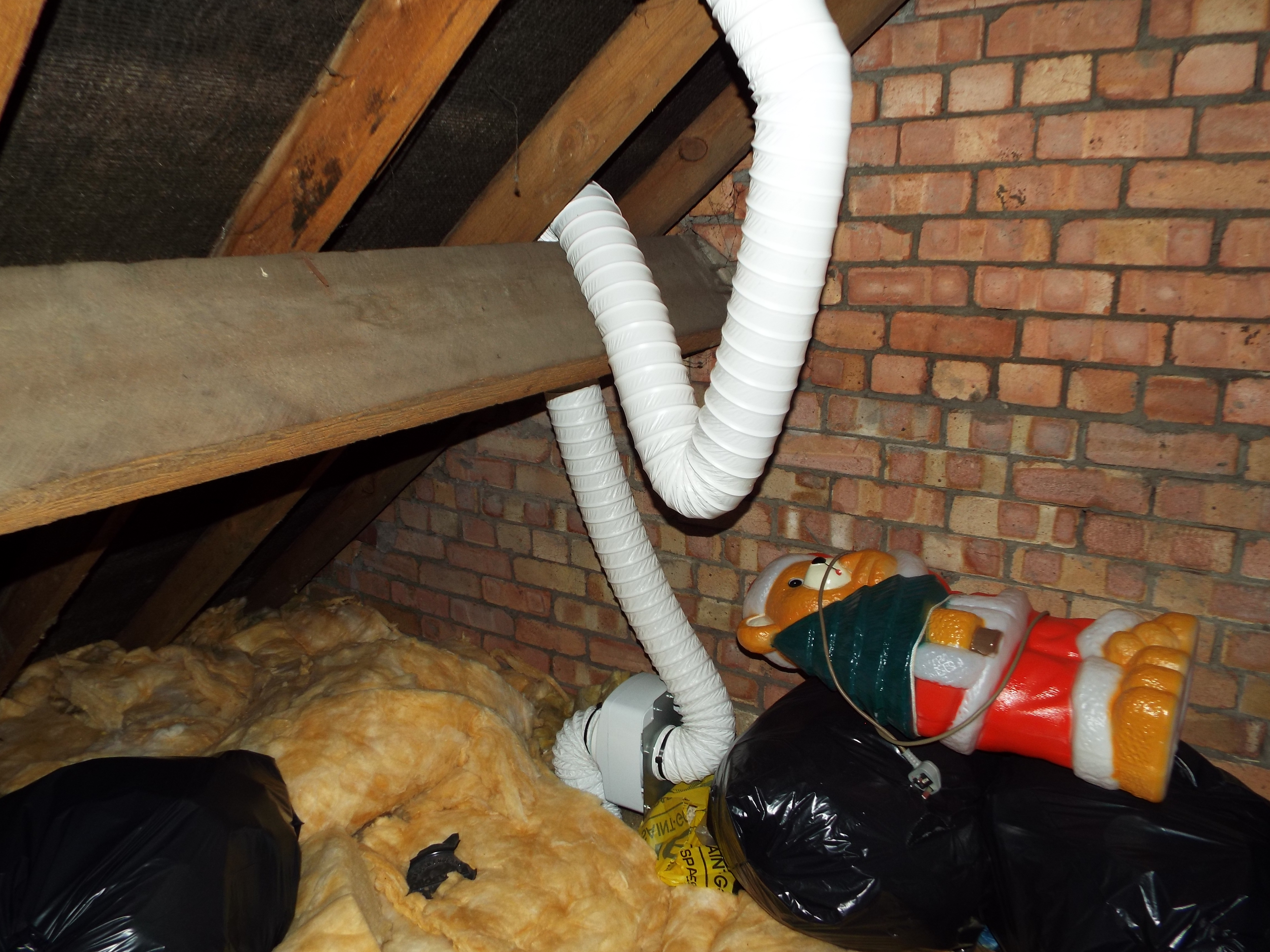
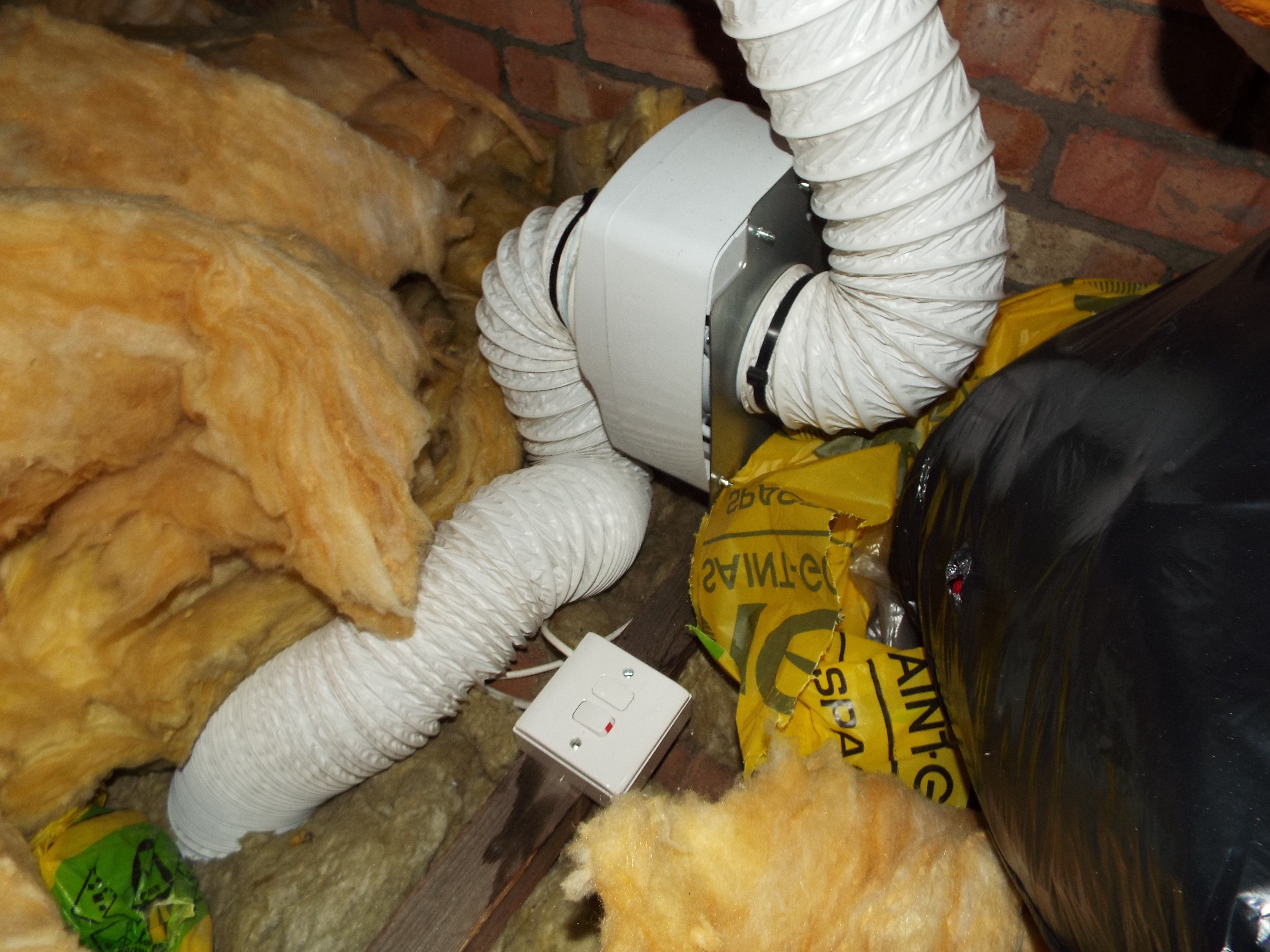
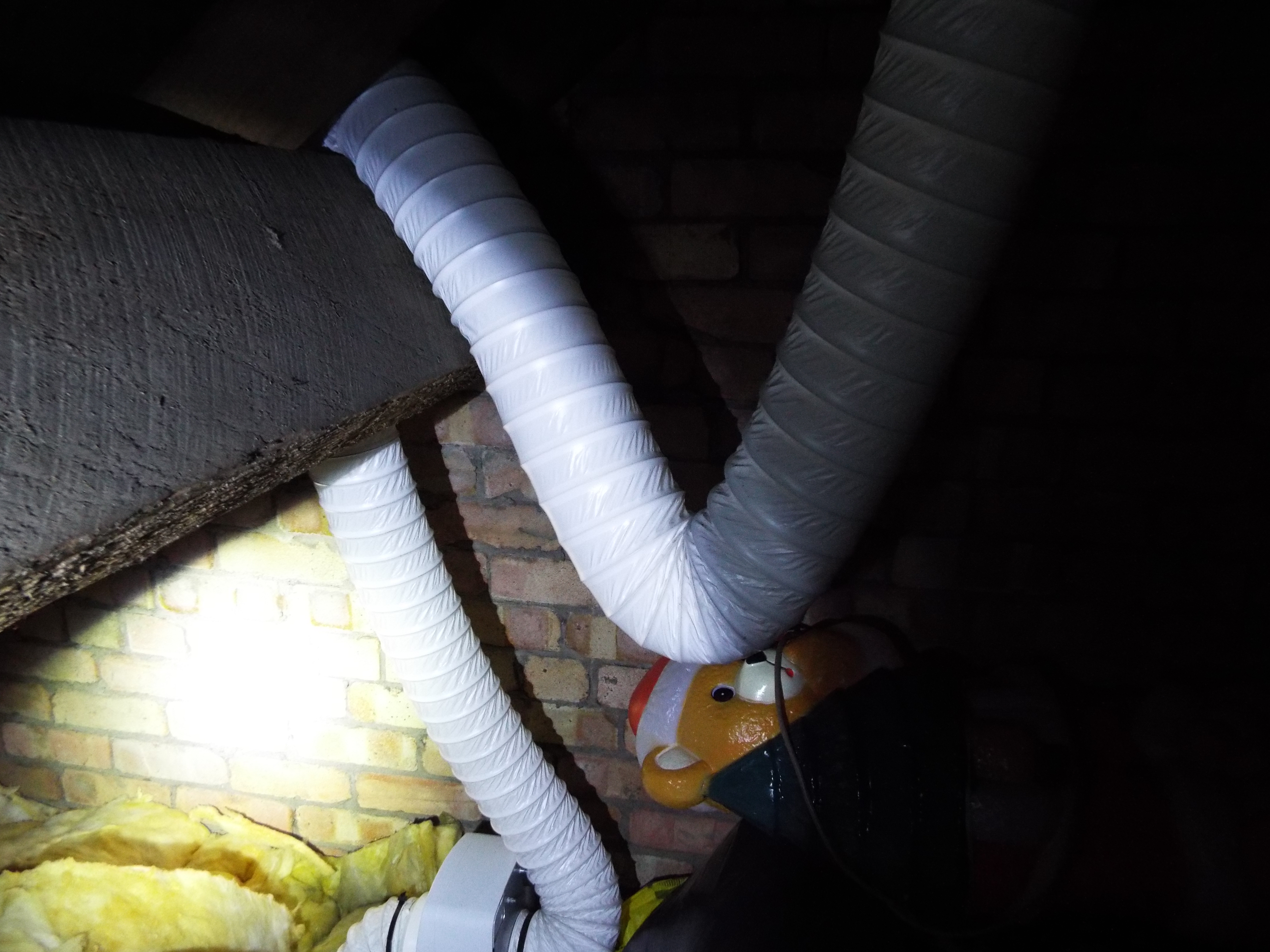
In addition, I’m also finding may of these installations / conversions are undertaken so poorly by inexperienced electricians / plumbers. Here’s an example of one I found yesterday. Again, another cyclone conversion, faceplate with front mounted duct leading to a ceiling mounted grill and exhausted from the rear through the roof covering. Firstly, the ducting used is flexible and corrugated, which isn’t ideal, secondly neither ducts too or from the fan have been cut to length resulting in excess ducting and sagging. You’ll also notice the duct has been slung over the purlin, why I have no idea, but again this has created excessive ducting in addition to unnecessary bends which Inevitably massively reduces the flow of air. Consequentially you can imagine what’s happening here, yes, the dusts full of water and the fans struggling to exhaust any more than 3 ltrs per second from atmosphere, there’s no wonder we’ve got mould throughout the bathroom.
Admittedly, the installation of this fan is poor, don’t get me wrong however from the multiple occasions I’ve seen this conversion I’m yet to be convinced it is good practice to try and convert a purpose built through the wall fan into an inline unit.
Poor fan choice or simply poor installation? you decide although in my opinion, it’s both!